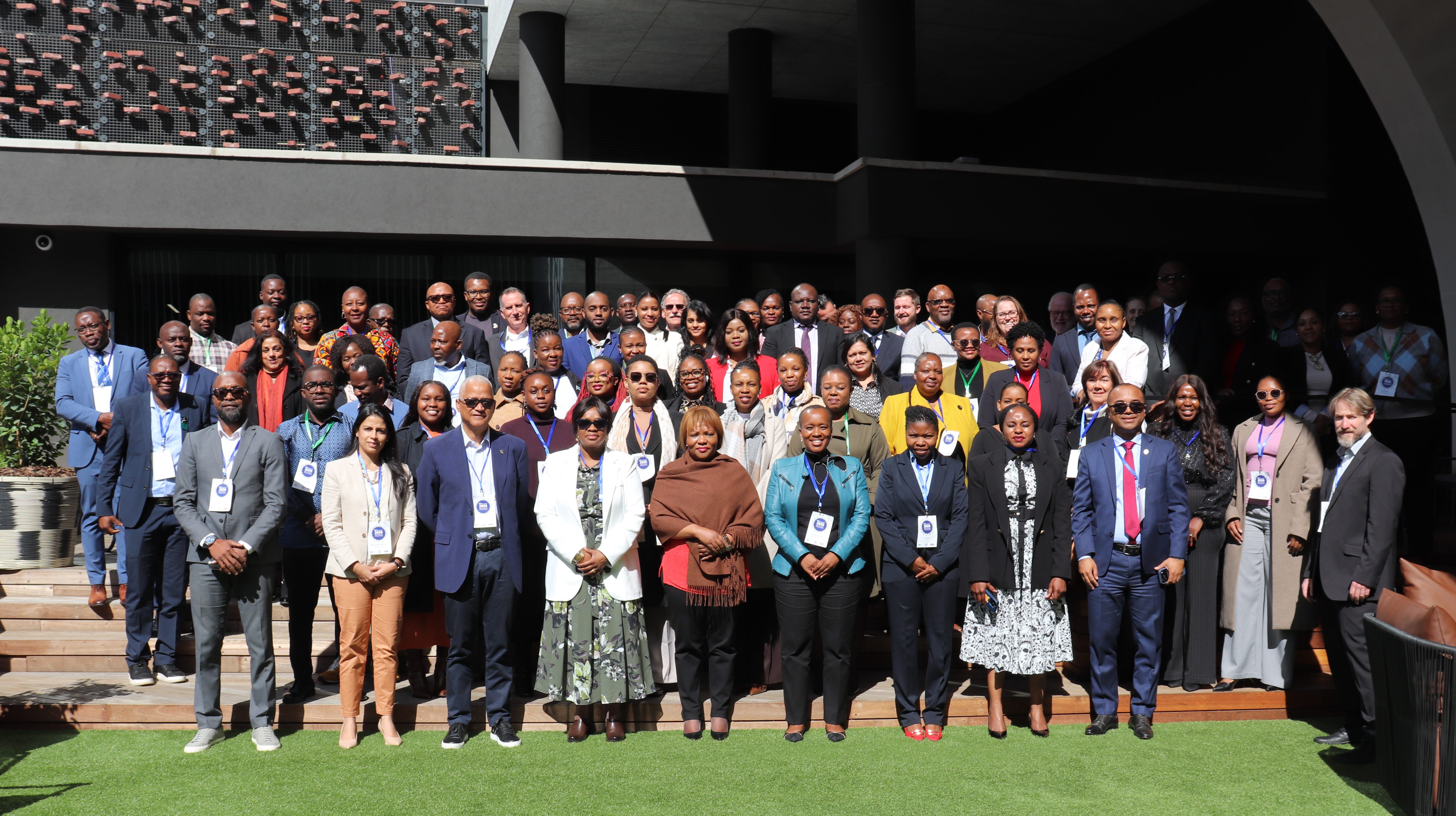
The Southern African Development Community (SADC) successfully convened its 10th Financial Inclusion Forum on 5-6 May 2026 at the South African Reserve Bank Head Office in Pretoria, South Africa. The milestone event brought together policymakers, regulators, private sector leaders, development partners, and other key stakeholders to reflect on progress and pave the way forward for deepening Financial Inclusion across the region.
Held under the banner of commemorating ten (10) years of regional collaboration, the Forum reaffirmed its role as a flagship platform for advancing alignment between national initiatives and regional priorities, while promoting peer learning and sharing of best practices among SADC Member States.
In her opening remarks, the SADC Director of Finance, Investment and Customs, Dr Yolanda De Figueiredo Sabino, highlighted the evolution of the Forum since its inception in 2015. She pointed out that the Forum continues to play a critical role in supporting the implementation of the SADC Strategy on Financial Inclusion and SME Access to Finance (2023–2028), as well as broader regional integration objectives. Dr Sabino also reflected on notable progress achieved in expanding access to financial services across the region. As of December 2025, approximately 78% of adults in SADC were financially included, up from 60% in 2016. She also emphasised that one of the biggest challenges in advancing Financial Inclusion lies in the limited and uneven implementation of the regional priority actions across Member States, often due to differing development contexts and priorities. To overcome this, she highlighted the need to strengthen the regional monitoring framework that ensures consistent and effective domestication of the SADC Strategy on Financial Inclusion and SMEs Access to Finance, facilitates the exchange of information, reduces discrepancies in progress.
In his keynote address, Dr Arif Ismail, the Head of the National Payment System Department at the South African Reserve Bank and Chairperson of the SADC Committee of Central Bank Governors’ Payment Systems Subcommittee, reminded Member States that “financial inclusion is not a sector-specific matter. It is a strategy for achieving every other goal we have set for ourselves”. He emphasised that financial inclusion must be treated as a cross‑cutting development priority, underpinning inclusive growth, poverty reduction and regional integration. He further called on Member States to move beyond simply counting accounts, stressing that “the next phase of our work must be about permanence, about building financial resilience, not just financial access. This means moving beyond the question of how many people have accounts to the harder question of how many people can survive a shock because of those accounts.’’
During the Forum, while appreciating Financial Inclusion progress, Member States highlighted persistent challenges, including high costs of cross-border remittances, limited financial literacy, and uneven access in rural and underserved communities. Addressing these constraints will require continued collaboration among governments, regulators, the private sector, civil society, researchers and development partners. Member States reaffirmed their commitment to advancing Financial Inclusion as a key driver of economic growth, poverty reduction, and regional integration.
Discussions during the two-day meeting centred on key thematic areas, including financial health, consumer protection, digital transformation, regional payment systems, electronic Know Your Customer (e-KYC), and the role of Digital Public Infrastructure (DPI) in expanding access, usage, and the quality of financial services.
The 10th anniversary of the SADC Financial Inclusion Forum, co‑convened by the SADC Banking Association and FinMark Trust with the support of the South African Reserve Bank, stands as a testament to a decade of collective progress and partnership. It also serves as a renewed call to action to ensure that the benefits of Financial Inclusion are extended to all citizens of the SADC region.


